

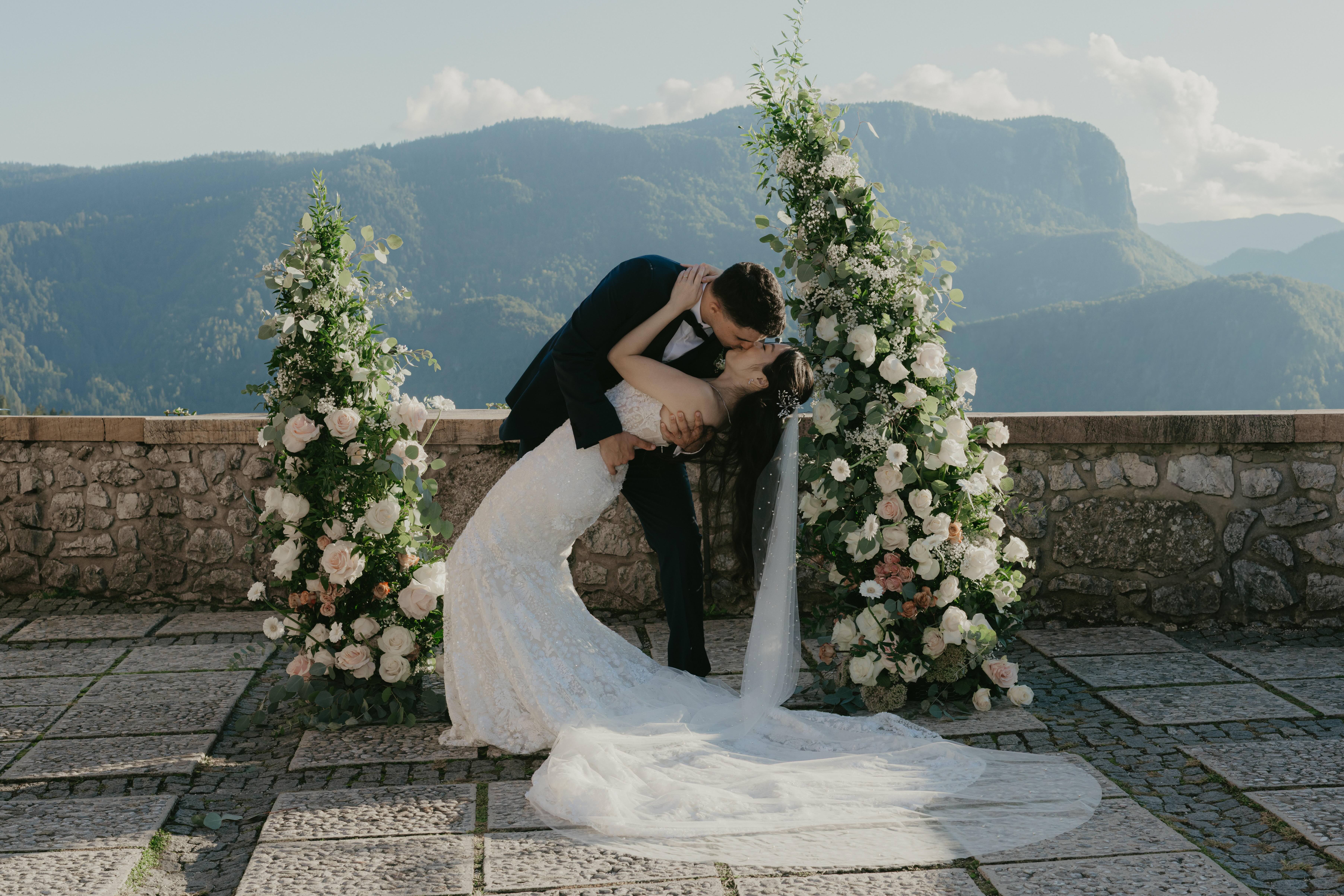
Yes, you can legally get married in Slovenia as a foreigner, even if neither of you is Slovenian or lives here. You need a civil ceremony in front of a Slovenian registrar, up to four documents from your home country (all except the passport no older than six months), and, in most cases, an apostille and a certified Slovenian translation. The marriage certificate you receive is valid at home, just like a wedding in your own country.
I'm Tatjana. I've been planning weddings in Slovenia for couples from abroad since 2015, and almost every first call includes the same slightly nervous question: "Is the legal part complicated?" Not really. It just has to be started early. Here's how it works, what you need to bring, and the places where couples usually get stuck.
Please note: legal requirements, fees and the way each administrative unit handles them can change over time. This guide reflects our experience at the time of writing, so before you order any documents, please talk to your wedding planner personally about the latest requirements.
Can foreigners legally get married in Slovenia?
Yes. Slovenian law allows two foreign citizens, or a foreigner and a Slovenian, to marry here. There is no residency requirement, so you can fly in for your wedding. The marriage is registered in Slovenia, and you can then use the Slovenian marriage certificate at home.
The conditions are the same as for Slovenian couples. You must both be of legal age, not already married, and not closely related. Since 2022, same-sex couples can marry on exactly the same terms as everyone else (more on that below).
Civil, church or symbolic ceremony: which one is legal?
Only a civil ceremony is legally binding in Slovenia. It is performed by a registrar from the local administrative unit (upravna enota), and nobody else can marry you legally, not a priest and not a celebrant.
That still leaves you a lot of freedom. Here is how our couples usually combine the options:
A popular choice is a short civil ceremony on the wedding day, followed by a symbolic ceremony at a lakeside venue in your own language. Another is to do the legal part quietly at home and have only a symbolic wedding in Slovenia. Both are completely fine. It depends on whether being "officially married in Slovenia" matters to you.
What documents do foreigners need to get married in Slovenia?
Each foreign partner needs four documents, issued by the authorities of their home country. All of them except the passport must be no older than six months on the day you apply.
- Birth certificate (an extract from the register of births).
- Certificate of single status, confirming that you are not married.
- Certificate of no impediment (sometimes called a "free to marry" certificate or certificate of legal capacity to marry), if your country issues one. Some countries combine it with the certificate of single status.
- Passport, as proof of citizenship.
If you were married before, bring proof that the previous marriage has ended, such as a final divorce decree or a death certificate.
Apostille or legalisation
Foreign documents must be certified before Slovenian authorities accept them:
- Apostille countries (some of Europe, the UK, the US, Canada, Australia and many others): an apostille stamp from your home country is enough.
- Multilingual EU birth extracts: birth certificates issued on the multilingual international form (Vienna and Paris conventions) don't need any certification.
- Countries with a bilateral agreement with Slovenia: no certification needed.
- All other countries: the document is first certified in your home country and then translated into Slovenian, or it is certified by your country’s embassy in Slovenia and then by the Slovenian Ministry of Foreign Affairs.
Translations
Documents that are not in Slovenian must be translated by a certified court translator (sodni tolmač). We usually arrange this in Slovenia once the originals arrive, which is often faster and cheaper than translating at home. A multilingual EU birth extract saves you one translation.
Tip from experience: the six-month rule catches couples out more than anything else. If your wedding is in September, don't order your documents in January. I usually tell couples to request them about six months before the wedding, then send me scans straight away so I can check them with the registrar before the originals are posted.
How to get married in Slovenia: step by step
This is the timeline we follow with our couples. Start at least six months before the wedding if you want a specific date and place.
- 6–12 months before: choose the date and place. Decide where you want the civil ceremony. The registrar's availability, not the venue's, is often what fixes the date.
- 6 months before: reserve the ceremony. We contact the administrative unit responsible for your wedding location (for Lake Bled, that is the administrative unit in Radovljica) and reserve a date and time.
- About 6 months or less: order your documents. Request the birth certificate, certificate of single status and certificate of no impediment in your home country, each with an apostille.
- As soon as they arrive: send scans. Email clear scans to your planner or the registrar so any problem is found while there's still time to fix it.
- About 4 months before: translations. Post the originals to Slovenia and have them translated by a certified court translator.
- Before the wedding: apply in person. Both of you register your intention to marry at the administrative unit and declare that you marry of your own free will. Usually you have to apply in person at least 30 days before the wedding. For couples from abroad, however, administrative units are often more flexible, and a few days before the wedding may be enough. Please check your specific case with your wedding planner.
- Wedding day: the civil ceremony. The registrar conducts the ceremony in Slovenian and an interpreter translates for you. Witnesses are optional under current Slovenian law, though most couples still choose two.
- After the wedding: your marriage certificate. Ask for an international (multilingual) extract of the marriage register and, if your country needs it, an apostille. With this, you register the marriage at home.
From my experience: step 6 is the one couples forget to plan into their trip. Arrive in Slovenia at least few working days before the wedding, so there's a buffer if the registrar needs anything else.
Where can the civil ceremony take place?
By default, civil ceremonies happen in the official wedding rooms of the administrative unit, during official hours, and every unit also sets times for Saturday weddings. Many of these rooms are beautiful in their own right.
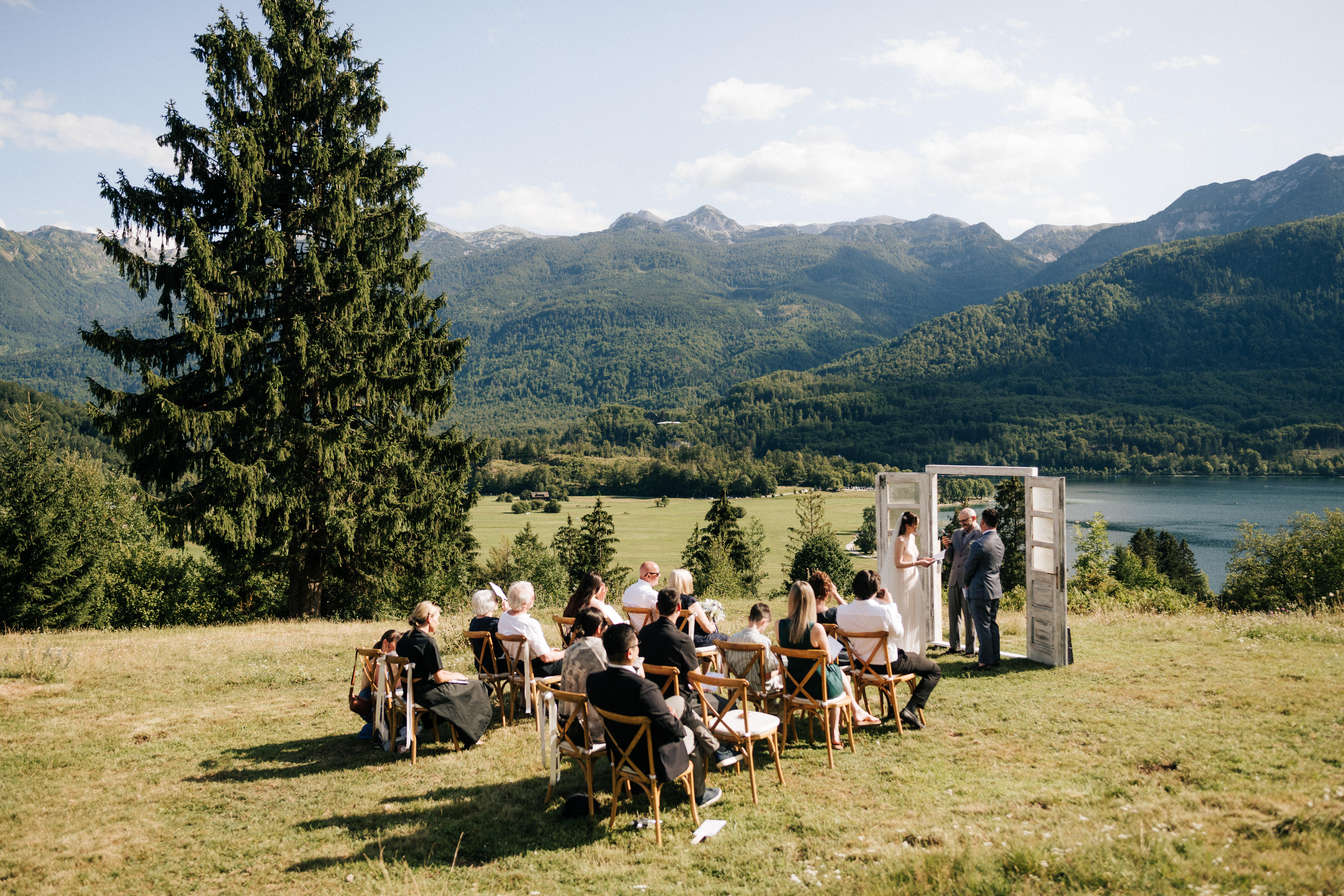
You can also ask for the ceremony outside the official premises, for example at Bled Castle, in a garden by the lake or at a vineyard. The administrative unit decides whether this is possible, and it tries to meet couples' wishes within its capacity. A ceremony outside official premises or hours comes with an extra fee for the couple.
How much does a legal wedding in Slovenia cost?
The legal part is a small share of a wedding budget. Typical costs are:
For a full breakdown of wedding costs, see our guide to how much a wedding in Slovenia costs.
Do we need an interpreter?
Yes, if either of you doesn't speak Slovenian. The ceremony is held in Slovenian, and the interpreter makes sure you understand what you're agreeing to. We book a certified interpreter for English and many other languages. Couples are often surprised by how much they like this part: their guests hear the vows twice, once in Slovenian and once in a language they understand.
Can same-sex couples get married in Slovenia?
Yes. Same-sex couples have been able to marry in Slovenia since July 2022, and the amended Family Code fully in force since early 2023 gives them the same rights as any other married couple. The process, documents and ceremony options described above are exactly the same. One thing to check at home: whether your own country recognises a same-sex marriage concluded abroad.
Common mistakes (and how to avoid them)
- Documents too old. Anything older than six months on the day you apply is rejected. Time your requests.
- Missing apostille. Without it, the document can't be used. Ask for the apostille when you order the document, not afterwards.
- A previous divorce. If one of you was married before, sort out the divorce paperwork first. It is the step most likely to take longer than expected.
- Names that don't match. If your name on the passport differs from the birth certificate (for example after an earlier marriage), bring the document that explains the change.
- Arriving too late. Plan to be in Slovenia a few working days before the wedding, so you can apply in person in time. Many couples also visit Slovenia a few months before the wedding to see the venues and meet their planner in person.
Do you need a wedding planner for a legal wedding in Slovenia?
You don't need one by law. Couples who live in Slovenia or speak Slovenian often handle it alone. For couples from abroad, though, a local planner saves a lot of emails and worry: we deal with the registrar in Slovenian, check your documents before they are posted, arrange translations and the interpreter, and make sure the legal part fits naturally into your day.
If you would like to get married legally in Slovenia, at Lake Bled, Lake Bohinj, on the coast or among the vineyards of Goriška Brda, send me a message with your date and the country your documents come from. I'll tell you exactly what you need.
Tatjana Ovsenek, wedding planner in Slovenia, Chic Weddings Slovenia
Related guides: Lake Bled wedding · Top 5 wedding venues in Slovenia · Our wedding planning services
Frequently asked questions
Do we have to live in Slovenia to get married here? No. There is no residency requirement. Foreign couples can travel to Slovenia just for their wedding.
Is a marriage in Slovenia legally valid in my home country? In most countries, yes. A civil marriage concluded in Slovenia is a legal marriage. You register it at home with the international marriage certificate and, if required, an apostille.
How long are the documents valid? All documents except the passport must be no older than six months when you apply at the administrative unit.
Do we need witnesses? No. Witnesses are optional under current Slovenian law. If you have them, they must be adults with legal capacity.
Is a church wedding at Lake Bled legally valid? Not on its own. Only a civil ceremony is legally binding in Slovenia, so couples who marry in the church on Bled Island also have a civil ceremony.
What language is the ceremony in? The civil ceremony is conducted in Slovenian, with an interpreter translating for couples who don't speak Slovenian.


